The Opening Drive Pattern
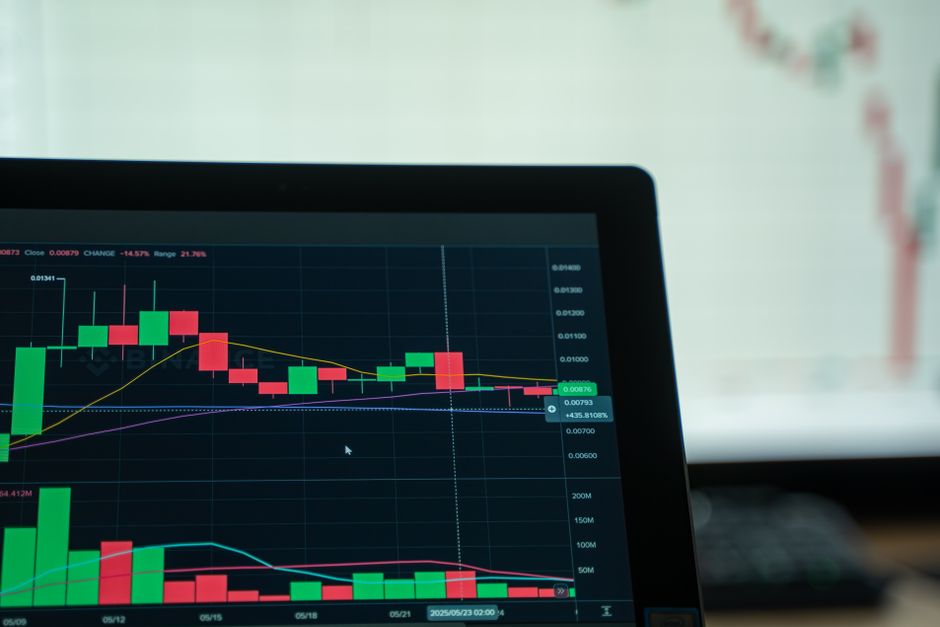
The ringing that signals the start of the session often masks a specific mechanical failure in price equilibrium. Data points recorded at orb trading opening bell dianaliang show that high momentum moves frequently bypass the expected volatility boundaries. Every observation within the orb data set confirms that a single direction often dominates the first fifteen minutes of regular trading hours. This specific pattern occurs when volume enters the market with enough force to ignore the standard deviation of the premarket. The momentum ignores the usual boundaries of the five minute range and moves straight through established levels.
The Mechanics of One Directional Momentum

The opening drive pattern is a mechanical event where price action moves in a single direction without returning to the initial opening price. Most traders look for a mean reversion, but the drive pattern represents a failure of that reversion. Instead of the price oscillating within the opening range, the candles stack in one direction. This movement creates a new session high very early in the day. The velocity of the move determines the strength of the drive. When the price moves past the first fifteen minutes of price action without a pullback, the drive is established. This is not a random fluctuation. It is a concentrated injection of liquidity that shifts the intraday bias immediately.
Defining the Boundaries

A standard opening range breakout typically involves a period of consolidation followed by a move. The opening drive pattern is different because the consolidation phase is nearly non-existent. The price moves from the cash open to a new level with minimal hesitation. Measuring this requires looking at the fifteen minute range to see if the price stays outside the initial expansion. If the price remains outside the initial volatility zone, the drive is active. The drive uses the momentum from the pre market to dictate the direction for the rest of the morning. A small sample of these moves shows that they rarely reverse during the first hour of the session.
Volume and Velocity Correlation
High volume at the market open provides the fuel for the drive. Without a spike in volume, the price will likely revert to the mean. The drive requires a specific type of volume profile where every candle has a larger footprint than the previous one. This creates a staircase effect. The price does not just drift higher. It jumps. This jump bypasses the typical support and resistance levels that exist within a standard timeframe. The drive ignores the noise of the early minutes and focuses on a singular direction. This behavior is a direct result of institutional orders hitting the tape at once.
Identifying the Fade Risk
The risk in a drive pattern is attempting to catch the reversal too early. Because the momentum is so strong, the price can stay outside the opening range for a long time. A trader looking for a reversal must wait for the velocity to slow down. The drive pattern is characterized by high speed. When the speed drops, the move might be over, but the drive itself is a one way street. Observing the thirty minute range helps in determining if the move has enough legs to continue through the morning. The drive is a specific mechanical phenomenon that exists outside of standard mean reversion models.